

If you're dealing with bloating that appears out of proportion to what you ate, fatigue that lingers despite decent sleep, headaches that seem random, or skin flare-ups that don’t respond to the usual fixes, it's easy to end up with fragmented advice. Eat more yoghurt. Take a probiotic. Cut gluten. Drink more water. Individuals frequently try some version of all of it, often without a clear reason or a lasting result.
Gut health rarely improves through guesswork alone. The digestive system is an ecosystem, not a single organ problem. Food quality matters, but so do fibre intake, plant diversity, hydration, movement, stress load, microbial balance, and in some cases delayed food reactions or impaired histamine breakdown. That’s why the most reliable answer to how to improve gut health naturally is a structured one. Build the foundations first, use targeted dietary strategies when symptoms point in that direction, and consider clinical-grade testing when the basics aren’t enough.
Beyond the Basics of Gut Discomfort
A distressed gut doesn’t always announce itself as obvious digestive disease. In practice, people often notice a cluster of symptoms first. Their stomach feels heavy after meals. Bloating builds by late afternoon. Energy dips. Headaches appear after certain foods. Skin becomes reactive. Bowel habits swing between sluggish and urgent. None of this feels dramatic enough for an emergency, but it’s disruptive enough to affect work, sleep, mood, and confidence around food.

What’s often missing is context. These symptoms may reflect a microbiome under strain, a diet too low in fermentable plant fibres, poor tolerance to specific foods, or a mismatch between “healthy” foods and your current digestive capacity. A person can eat salads, kefir, and smoothies every day and still feel unwell if the underlying issue is IBS, histamine intolerance, or a poorly planned fibre increase.
What natural improvement actually looks like
A natural gut health plan isn’t about chasing a single superfood. It usually follows three layers:
- Foundation habits that support the gut environment. Daily fibre, varied plant foods, hydration, movement, and meals that your body can process comfortably.
- Targeted food strategy when symptoms persist. That may mean a temporary elimination phase, a low-FODMAP approach, or a careful reintroduction process instead of indefinite restriction.
- Diagnostics when needed to reduce trial and error. Blood serum testing, stool analysis, and other clinical tools can help separate assumptions from actionable findings.
Gut symptoms often become more confusing when people add more supplements before clarifying what the gut is reacting to.
What usually doesn’t work
The least helpful pattern is random stacking. People add probiotics, digestive enzymes, greens powder, collagen, and fermented foods all at once, then have no idea what helped or what made things worse. Another common problem is treating every symptom as a “leaky gut” issue without checking the more practical basics first.
A better approach is calm, methodical, and personalised. If you want lasting improvement, the question isn’t only what’s good for the gut in general. It’s what your gut can tolerate, use, and recover with right now.
Foundational Diet and Lifestyle Adjustments
Most gut repair starts with everyday inputs, not advanced protocols. In Australia, a 2021 survey by the Gut Foundation found that 68% of Australians experience regular digestive issues and only 23% meet the recommended daily fibre intake, a pattern linked with poorer gut health outcomes according to Harvard Health’s overview of simple ways to improve gut health.

That matters because fibre does more than keep the bowels moving. It acts as a prebiotic, which means it feeds beneficial gut bacteria. The practical target is 21 to 38 grams per day, using foods that are accessible and tolerable rather than forcing a dramatic overnight jump.
Build fibre with control, not enthusiasm
A sudden switch from a low-fibre diet to a very high-fibre diet often backfires. The gut needs time to adapt. Start with cooked, easier-to-digest options if your symptoms are active.
Useful choices include:
- Legumes in small serves such as lentils or chickpeas, especially when well-cooked
- Whole grains like oats and quinoa
- Root vegetables including sweet potato
- Fruit with fibre such as berries
- Leafy greens and cruciferous vegetables adjusted to tolerance
- Healthy fats alongside fibre because meal balance matters, and this guide to olive oil for gut health gives a practical overview of how olive oil can fit into an anti-inflammatory eating pattern
Practical rule: Increase fibre gradually and judge success by symptom stability, not by how aggressively you chase a target.
A helpful meal pattern is to make one change at a time. Add oats at breakfast for several days. Then add a legume-based lunch. Then increase vegetables at dinner. That gives you feedback your body can use.
Diversity matters more than one “perfect” food
Many people get stuck eating the same small list of “clean” foods. The microbiome usually responds better to diversity than repetition. Rotating plant foods broadens the range of fibres and plant compounds reaching the colon, which supports a more resilient ecosystem.
For practical meal planning, a structured resource such as planning your diet can help you organise variety without making meals overly restrictive.
Hydration also matters. If stools are dry and transit is slow, adding fibre without enough fluid can make symptoms worse. Water doesn’t replace fibre, but fibre works better when the bowel is adequately hydrated.
A short visual guide may help if you’re trying to make these changes in a realistic way:
Movement changes the gut environment
Exercise has a direct relationship with microbial health. The same Harvard Health source notes a systematic review showing that 150 to 270 minutes of weekly moderate-to-high-intensity exercise can positively alter gut microbiota, and Australian research cited there found that active individuals had 25% higher microbial diversity than sedentary peers.
That doesn’t mean punishing workouts. For many people, the gut responds well to consistency more than intensity. Brisk walking, cycling, strength training, and regular movement after meals can all support motility and reduce the sluggishness that often sits behind bloating.
Stress also deserves attention, even though it’s less measurable day to day. A tense nervous system can impair digestion, alter bowel patterns, and amplify pain sensitivity. Better gut health often comes from reducing digestive burden, not just adding more “gut” products.
Targeted Elimination and Reintroduction Strategies
General healthy eating is the right starting point. But if symptoms continue despite a solid foundation, a short-term dietary investigation can help identify what’s provoking them. Often, many people become either too vague or too extreme. They remove half their diet for months, feel socially restricted, and still don’t know which foods are responsible.
A more useful elimination process is structured, temporary, and designed to answer a question.
When an elimination diet is worth using
In Australia, IBS affects approximately 11% of the population, and a University of Sydney trial in IBS patients found 68% symptom reduction after 8 weeks on a targeted diet, with microbiota diversity increasing by 25% according to Cleveland Clinic’s discussion of improving digestive health naturally. The same source notes a common pitfall. Increasing fibre too quickly can aggravate bloating, which is why low-FODMAP starting points can be useful before broadening the diet again.
Not everyone needs a low-FODMAP plan. Some people respond better to a simpler elimination of likely triggers such as alcohol, highly processed foods, or a narrow group of repeat foods. The key is matching the strategy to the symptom pattern.
Comparison of Dietary Intervention Strategies
| Strategy | Primary Goal | Best Suited For | Key Foods to Temporarily Remove |
|---|---|---|---|
| General elimination diet | Identify broad food triggers | Mixed symptoms such as bloating, headaches, skin flares, or fatigue linked to meals | Common personal suspects and highly processed foods |
| Low-FODMAP diet | Reduce fermentable carbohydrates that worsen IBS symptoms | Bloating, abdominal pain, gas, altered bowel habits | High-FODMAP foods such as selected fruits, selected dairy products, onions, garlic, and certain legumes |
| Histamine-aware trial | Assess whether histamine-rich foods are aggravating symptoms | Bloating plus headaches, flushing, fatigue, or reactions to fermented foods | Fermented foods, aged foods, alcohol, and other high-histamine items |
The method matters more than the label
A proper elimination diet has three phases.
Elimination
Keep the food plan tight enough to reduce symptom noise, but not so restrictive that nutrition suffers. This phase should be short term. The purpose isn’t to prove discipline. It’s to lower the background reaction level.Challenge
Reintroduce one food or food group at a time in a deliberate way. If you challenge several at once, the result becomes unreadable.Reintroduction
Build the broadest diet you can tolerate. The ideal outcome is not a permanently restricted menu. It’s a personalised diet that keeps symptoms manageable while preserving variety.
The success of elimination work depends less on what you remove and more on how carefully you bring foods back.
What people often get wrong
The biggest mistake is staying in elimination mode too long. That can narrow microbial diversity, create anxiety around food, and make eating out difficult. The second mistake is interpreting every symptom as a food intolerance when meal size, stress, poor sleep, constipation, or rapid fibre changes are the actual triggers.
Keep a practical symptom journal. Note the food, portion, timing, stress level, and bowel response. Patterns become clearer when you record context, not just the ingredient. If symptoms are severe or confusing, practitioner guidance saves a lot of unnecessary restriction.
The Role of Probiotics and Prebiotics
The probiotic category is crowded with marketing, and much of it implies that more bacteria automatically means better gut health. It doesn’t work that way. Prebiotics are the fibres that feed beneficial bacteria already living in the gut. Probiotics are live microorganisms delivered through foods or supplements. Both can help, but neither is universally appropriate.
Start with food before capsules
Prebiotic foods often deserve attention first. If the gut ecosystem doesn’t have enough substrate, adding probiotics alone often produces disappointing results. Foods such as onions, garlic, oats, legumes, and other plant fibres support the conditions in which beneficial microbes can thrive. Fermented foods such as kefir, sauerkraut, and kimchi may also help, provided they suit the person eating them.
A balanced explanation of this relationship is useful if you want more background on gut microbiome prebiotics probiotics.
Why probiotics can make some people feel worse
A probiotic isn’t a cure-all. If someone has marked bloating, strong reactions to fermented foods, or symptoms that flare after “healthy” gut supplements, adding more bacteria may not be the first move. Some people tolerate fermented foods well. Others feel more distended, foggy, or headachy.
That doesn’t automatically mean probiotics are harmful. It means the gut environment needs context. If motility is poor, if the person is reacting to histamine, or if a supplement contains strains that don’t fit the symptom pattern, the result can be disappointing.
Consider these principles:
- Use food first when possible because it gives nutrients, fibres, and better dietary context
- Introduce one product at a time so you can assess tolerance clearly
- Stop if symptoms intensify rather than assuming a worsening reaction means it’s “working”
- Avoid long supplement stacks when the basics haven’t been established
A supplement should answer a clear need. It shouldn’t compensate for a diet that still lacks diversity, rhythm, or tolerance.
The practical takeaway is simple. Feed the microbiome first. Add probiotics selectively. If fermented foods repeatedly worsen symptoms, take that seriously rather than forcing them because they’re popular.
Using Clinical-Grade Diagnostics to Guide Your Journey
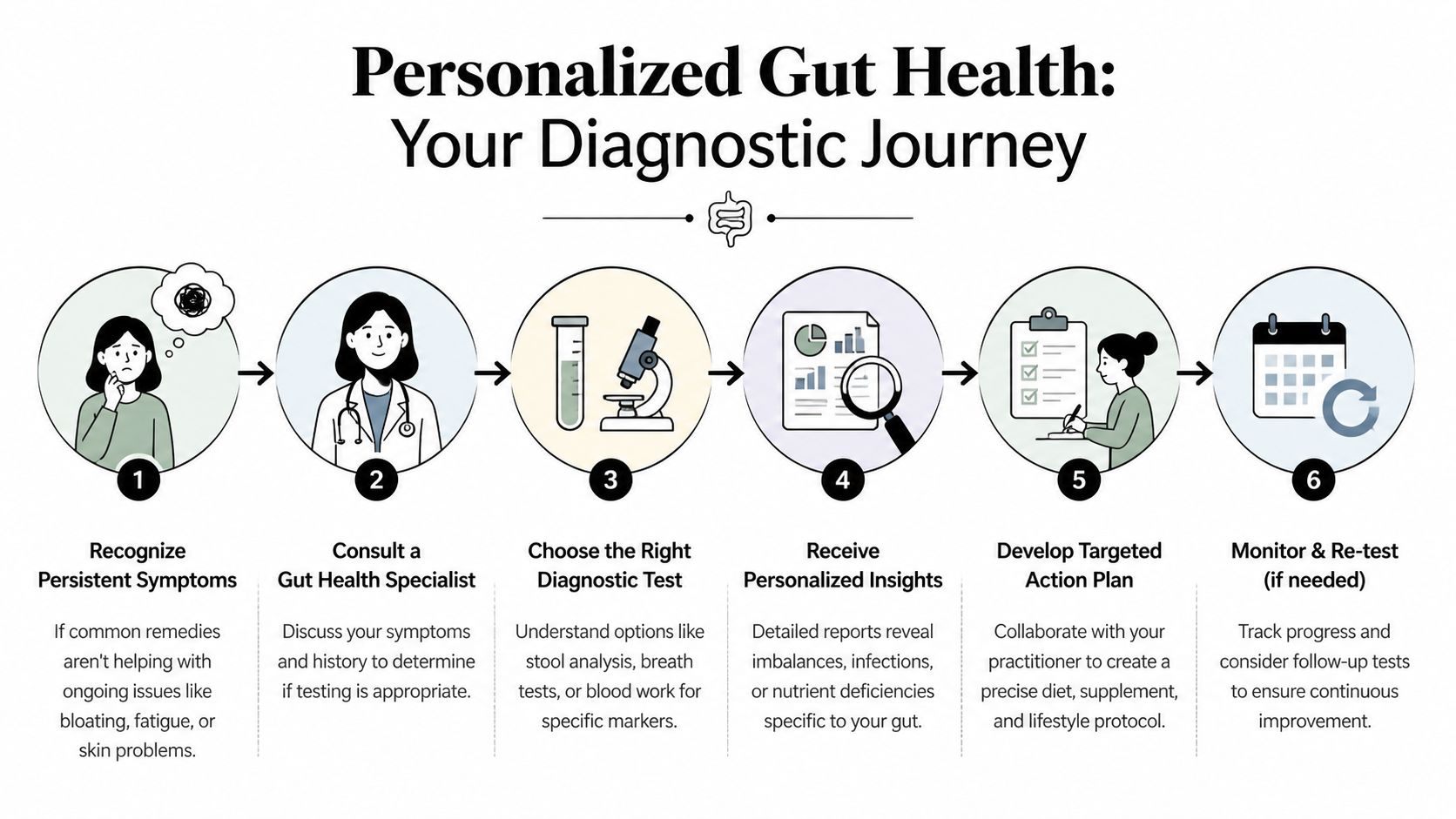
When symptoms continue after sensible food and lifestyle work, testing can shorten the path. This is the point where a personalised plan becomes more useful than generic advice. Good diagnostics don’t replace clinical reasoning. They support it by showing whether delayed food reactions, histamine intolerance, or microbial imbalance are contributing to the picture.
When testing becomes reasonable
Testing is worth considering when symptoms are persistent, patterns are inconsistent, or you’ve already trialled foundational changes without enough clarity. It’s also useful when a person seems to react to foods that are generally considered healthy, including fermented foods, leftovers, or heavily repeated staples.
A practical clinical sequence often looks like this:
- Review symptom pattern and diet history
- Rule out obvious dietary load issues such as excessive fibre escalation or poor meal timing
- Use targeted testing based on the strongest clues
- Translate results into a rotation, elimination, or support plan
- Retest or reassess only if clinically relevant
For broader context on microbiome assessment, microbiome testing in Australia is one way to understand where stool analysis may fit.
IgG food intolerance testing and delayed reactions
IgG food intolerance testing is different from classic allergy testing. It’s used to investigate delayed immune reactions that may relate to ongoing symptoms such as bloating, headaches, fatigue, skin irritation, and joint discomfort after certain foods. The value is not in generating a fear-based food list. The value is in narrowing the field so the elimination and reintroduction process becomes more targeted.
Method matters here. For this kind of work, venous blood draw with blood serum analysis is the appropriate standard when you want clinical-grade handling and more reliable sample quality. Pathology collection and laboratory processing offer a level of control that home-test alternatives often can’t match.
One option in Australia is ImuPro Australia, which uses blood serum collected through pathology centres for clinical-grade IgG and complementary wellness testing. In practice, that can help patients and practitioners move from broad suspicion to a more organised dietary plan.
DAO testing and histamine intolerance
Histamine intolerance is often overlooked in people with “mystery” gut symptoms. A 2025 Royal Australian College of GPs update estimated 15 to 20% prevalence in chronic symptom cohorts, and a Sydney University pilot found 32% of IBS patients had low DAO levels, with symptom improvement associated with a low-histamine approach according to this discussion of gut health and DAO-related symptoms.
That matters because many foods promoted for gut health are high in histamine or can aggravate histamine-related symptoms. Kefir, kimchi, aged foods, and certain leftovers can be useful for one person and problematic for another.
Direct-to-consumer DAO testing via a blood serum sample can help identify whether low DAO activity may be contributing. Again, the important methodological point is the same. Use venous blood draws, pathology collection, and clinical-grade processing. That gives a clearer metric than casual self-experimentation with fermented foods.
Stool analysis and ecosystem-level insight
Detailed stool analysis adds a different type of information. Instead of asking, “Which foods might I be reacting to?”, it asks, “What’s happening inside the gut environment itself?” This can help assess microbial balance, digestion, inflammatory markers, and whether the bowel ecosystem supports or frustrates recovery.
Stool findings don’t stand alone. They’re most useful when interpreted alongside symptoms, food reactions, and bowel patterns. But they can be highly valuable when bloating, irregular stools, or recurring digestive discomfort continue despite well-planned diet changes.
Clinical-grade testing is most useful when it reduces unnecessary restriction and helps a practitioner create a narrower, smarter plan.
Creating Your Long-Term Gut Wellness Plan
Long-term gut health isn’t about staying on a protocol forever. It’s about building a diet and routine that remain broad, stable, and responsive to change. Once symptoms settle, the focus should shift from “What do I need to cut out?” to “What can I safely bring back in, rotate, and maintain?”
What maintenance usually looks like
A durable plan often includes:
- A rotation mindset so the same foods aren’t repeated heavily every day
- Mindful reintroduction after any elimination phase, with attention to portions and symptom timing
- Ongoing basics such as plant diversity, hydration, movement, and regular meals
- Periodic review if symptoms return after travel, illness, major stress, or medication changes
This is also where realism matters. Gut symptoms may improve in stages. Bloating may settle before energy improves. Stool regularity may normalise before food tolerance broadens. Progress is rarely perfectly linear.
When to get extra support
If symptoms are interfering with daily life, support is appropriate. A GP, dietitian, naturopath, or nutrition practitioner can help interpret the pattern and decide whether dietary work alone is enough. Extra help is also sensible when food fear is growing, the diet has become very narrow, or symptoms now include headaches, skin flare-ups, or fatigue that seem linked to eating.
Emotional load matters too. Ongoing digestive discomfort can create meal anxiety, social withdrawal, and hypervigilance around symptoms. If that’s part of your experience, broader support can be useful. For readers who want counselling support as part of a whole-person plan, you can explore Vernon therapy options in a way that acknowledges the stress and behavioural side of chronic symptoms.
The goal is not perfection. It’s a gut environment that is better nourished, less reactive, and easier to manage in ordinary life. That usually comes from steady foundations, careful experimentation, and testing that clarifies decisions when symptoms remain muddy.
If ongoing bloating, headaches, fatigue, skin flare-ups, or digestive discomfort still don’t make sense, ImuPro Australia offers clinical-grade blood serum testing collected through pathology centres, including IgG food intolerance assessment, DAO enzyme testing for histamine intolerance, and complementary gut wellness diagnostics. Used alongside practitioner guidance and foundational diet work, these tools can help turn a confusing symptom pattern into a more precise and sustainable plan.