
Some people reach a birthday and feel broadly well. Others are the same age on paper yet already dealing with fatigue, slower recovery, digestive issues, skin flare-ups, or the sense that their body is older than it should be. That gap is exactly why more people want to check biological age rather than rely on the calendar alone.
In practice, biological age matters because it reflects how the body is functioning, not just how many years have passed. It gives a more useful view of health trajectory, disease risk, and healthspan. It also gives clinicians and health-conscious individuals something far more actionable than a birth date: a baseline that can be monitored and, in many cases, influenced.
Beyond the Calendar Your True Cellular Age
Two people can be 45. One trains well, sleeps well, and recovers quickly. The other is dealing with bloating, headaches, skin flares, joint aches, or energy that never quite returns. The calendar treats them the same. Clinically, they may be ageing very differently.
Your chronological age is the number of years since birth. Your biological age reflects how your body is functioning now across cellular, metabolic, and inflammatory processes.

The distinction is clinically significant because biological age can shift away from your birth age in either direction. That gap often shows up alongside differences in recovery, metabolic resilience, symptom load, and long-term disease risk.
For health-conscious people in Australia and New Zealand, the practical question is not just, "How old is my body?" It is, "What is pushing it in that direction?" Standard biological age testing can estimate the pace of ageing, but it usually does not explain the inflammatory triggers behind it.
That is where the concept becomes useful in practice. If low-grade inflammation is part of the picture, food reactions, immune activation, poor sleep, high stress, under-recovery, and metabolic strain may all be contributing. Identifying those drivers gives you something a standalone age score cannot give. A personalised plan.
Why people check biological age
People rarely pursue testing out of curiosity alone. They usually want answers they can act on.
Common reasons include:
- Symptoms that do not fit neatly into standard testing, such as bloating, headaches, skin irritation, joint discomfort, or ongoing fatigue
- Preventive health planning based on current function rather than age-based assumptions
- Checking whether a diet, training, or supplement strategy is helping, especially when the body still feels inflamed or slow to recover
Biological age is most useful when it leads to a clear next step.
A dynamic measure, not a fixed label
Biological age changes as the underlying inputs change. Sleep, stress, activity, body composition, nutrient status, and inflammatory burden all affect the trajectory.
In clinic, the trade-off is straightforward. A single biological age result can be motivating, but on its own it is incomplete. The more useful approach is to pair age-related markers with testing that helps explain why the body is ageing faster or recovering poorly. That is particularly relevant when symptoms suggest immune or food-related inflammation. In those cases, tools such as ImuPro's diagnostic testing can add the missing layer and help turn an abstract age estimate into a targeted intervention plan.
The Science Behind Measuring Biological Age
Biological age is estimated by measuring how the body is functioning at a cellular and system level, then comparing those patterns with what is typically seen across the lifespan. In practice, the useful question is not only "How old does the test say you are?" It is "Which processes are pushing that result?"
That distinction matters in clinic. Two people can have a similar biological age score for very different reasons. One may be dealing with poor glucose control and low fitness. Another may have a persistent inflammatory burden, sometimes linked to gut disruption or immune reactions to foods, which is why pairing age testing with tools such as microbiome testing in Australia can add context that a standalone age estimate does not provide.
DNA methylation and epigenetic clocks
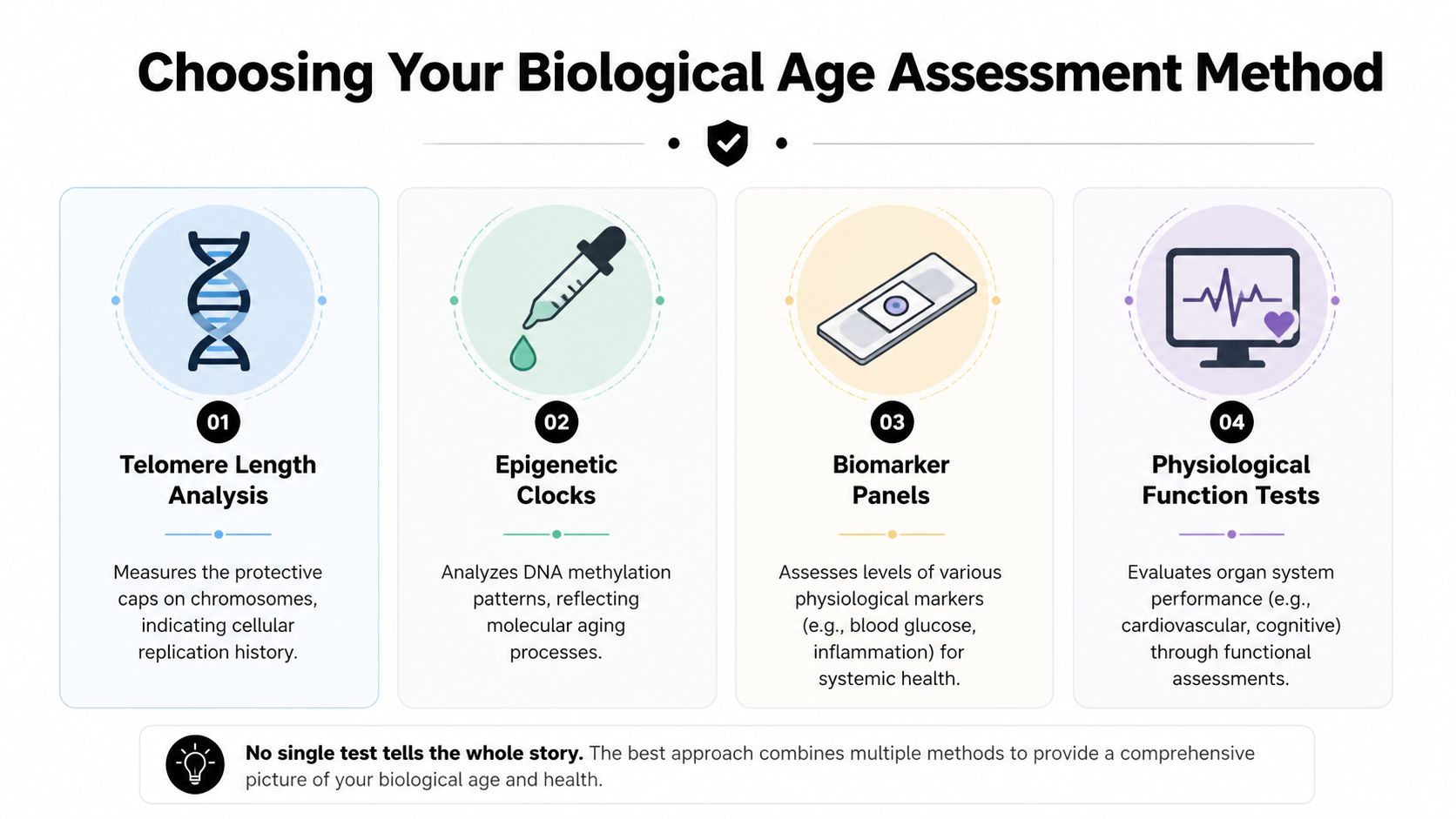
The best-validated method for estimating biological age uses DNA methylation, often referred to as epigenetic clock testing, according to biologicalagecalculator.org's overview of biological age methods. Methylation marks influence how genes are regulated over time. As those patterns shift, they can be used to estimate how quickly the body is ageing relative to calendar age.
This method is scientifically useful because it measures a process tied to ageing biology itself, not just the downstream effects seen on a standard blood test.
Blood biomarker models
Epigenetic testing is not the only approach. Multi-biomarker models use routine pathology markers linked to inflammation, metabolic health, kidney function, liver function, and immune activity, reflecting how ageing rarely shows up in one pathway alone.
In clinical use, these models can be easier to integrate with day-to-day care because the markers are familiar and often actionable. If C-reactive protein is high, glucose is drifting up, or white cell patterns suggest ongoing immune activation, those findings point toward targets for intervention.
A practical summary:
| Method | What it measures | Clinical value |
|---|---|---|
| Epigenetic clocks | DNA methylation patterns | Strong validation for estimating biological age |
| Biomarker models | Blood markers linked to inflammation, metabolism, and organ function | Useful for identifying systems under strain |
| Functional assessments | Physical performance and resilience | Adds context about day-to-day capability |
Functional measures add real-world context
Lab data matters, but so does function.
Physical capability tests can show how ageing is presenting in the body you live in every day. Sitting, rising, walking speed, grip strength, and recovery capacity give another layer of information, especially when symptoms do not match routine pathology neatly.
In practice, I treat these as context markers rather than substitutes for molecular or blood-based testing. They help confirm whether a lab-based result is showing up as reduced resilience, poor recovery, or loss of physical reserve.
Where telomeres fit, and where they fall short
Telomere length still gets attention because telomeres help protect chromosomes as cells divide. The limitation is straightforward. Telomeres reflect one ageing mechanism, not the wider picture.
On their own, they do not explain whether accelerated ageing is being driven by blood sugar control, immune activation, nutrient status, poor sleep, or chronic low-grade inflammation. They also do not help much with the next clinical question, which is what to change first.
The clinical interpretation that matters
No single marker measures ageing fully. The strongest interpretation comes from combining molecular data, blood biomarkers, and function, then asking what is driving the result.
That is where personalised inflammatory assessment becomes useful. Standard biological age tests can estimate pace of ageing, but they often stop short of identifying modifiable triggers. If food-related immune activation is contributing to symptoms or systemic inflammation, ImuPro's diagnostic approach can help connect the age score to a practical plan rather than leaving it as an interesting number.
Choosing a Clinical Method to Assess Your Age
Once you decide to check biological age, the next question is practical. Which method gives a result you can trust, and which result can guide care?
The answer usually comes down to clinical-grade sampling, the quality of the laboratory process, and whether the test captures enough of the biology to be useful.
Comparing the main options
Some methods are better suited to broad curiosity. Others are better suited to real clinical interpretation.
| Option | Strength | Limitation |
|---|---|---|
| Epigenetic clock testing | Strong scientific validation | May need context from symptoms and routine pathology |
| Biomarker panel from venous blood serum | Practical and clinically familiar | Standard panels may miss personalised inflammatory triggers |
| Telomere analysis | Useful as one ageing signal | Too narrow on its own |
| Functional testing | Reflects real-world resilience | Best used alongside lab data |
The trade-off is straightforward. A narrower test can sound appealing, but a broader clinically supervised assessment is usually more useful if the goal is decision-making rather than curiosity.
Why pathology collection matters
For blood-based assessment, venous blood draw through a pathology collection service offers the best foundation for sample integrity and laboratory reliability. In practice, that means better control of collection conditions, handling, transport, and analysis.
That clinical pathway is especially important when results may influence follow-up decisions about inflammation, diet, gut health, or further investigation. Home-test alternatives often promise convenience, but convenience isn't the same as laboratory quality. If the sample quality is inconsistent, the interpretation becomes weaker.
A biological age result is only as useful as the sample and lab process behind it.
What standard biological age panels often miss
One of the biggest blind spots is chronic low-grade inflammation with no obvious cause. Standard frameworks often include markers such as C-reactive protein, but they do not systematically include delayed food-specific IgG responses, as noted in this discussion of gaps in biological age testing. That matters because undiagnosed food intolerances may contribute to ongoing inflammatory activity and potentially increase CRP, which can then influence a person's measured biological age.
For patients in Australia and New Zealand, this becomes highly relevant when the lab report doesn't match the lived experience. Someone may show inflammatory or metabolic strain without an obvious diagnosis, yet still be dealing with food-related triggers, gut disturbance, or both. In those cases, a broader work-up can add context, especially when paired with tools such as microbiome testing in Australia.
What tends to work and what doesn't
What works is a test chosen for a reason. If the question is cellular ageing, an epigenetic approach is strong. If the question is systemic strain, a biomarker panel from venous blood serum helps. If symptoms suggest hidden inflammatory drivers, standard age testing alone often isn't enough.
What doesn't work is treating every biological age result as self-explanatory. A number without context can create false reassurance or unnecessary worry.
The Pathology Collection and Lab Analysis Process
People grow comfortable with the idea of testing once they understand how the process works. Clinical-grade assessment is far less mysterious than it sounds.
The key difference is that the sample is collected through a pathology collection process rather than a casual home method. That gives the laboratory a more stable, better-controlled specimen to analyse.

What the process usually looks like
In Australia and New Zealand, the sequence is typically straightforward:
- A test is arranged through a provider or practitioner.
- You attend a pathology collection centre for a professional venous blood draw.
- The sample is prepared and transported under laboratory protocols.
- The lab analyses the serum using the relevant testing methodology.
- Results are compiled into a report that can be reviewed in clinical context.
That structure matters because it reduces variables. Biological age assessment and related inflammatory testing are only as good as the sample quality, chain of handling, and lab standard behind them.
Why venous blood serum is the preferred foundation
Venous collection provides a more dependable sample for serum analysis. In clinical practice, that's important for stability, consistency, and confidence in the result.
It also supports a broader diagnostic view. If someone wants to assess biological age while also exploring inflammation, delayed food reactions, or complementary wellness markers, the pathology pathway allows those tests to sit within a more professional framework.
A short overview of the collection pathway can help visualise the process:
What happens in the lab
Once the sample reaches the laboratory, the important work is invisible to the patient but central to the result. The lab verifies the sample, processes it according to the assay requirements, and analyses the relevant biological markers under controlled conditions.
For consumers, the practical takeaway is simple:
- Clinical oversight improves reliability because collection and handling follow established procedures
- Serum-based analysis supports better consistency than ad hoc consumer testing pathways
- A formal lab report is more useful when you need practitioner input or follow-up planning
This is why pathology collection isn't a minor detail. It's part of the quality of the test itself.
How to Interpret Your Biological Age Results
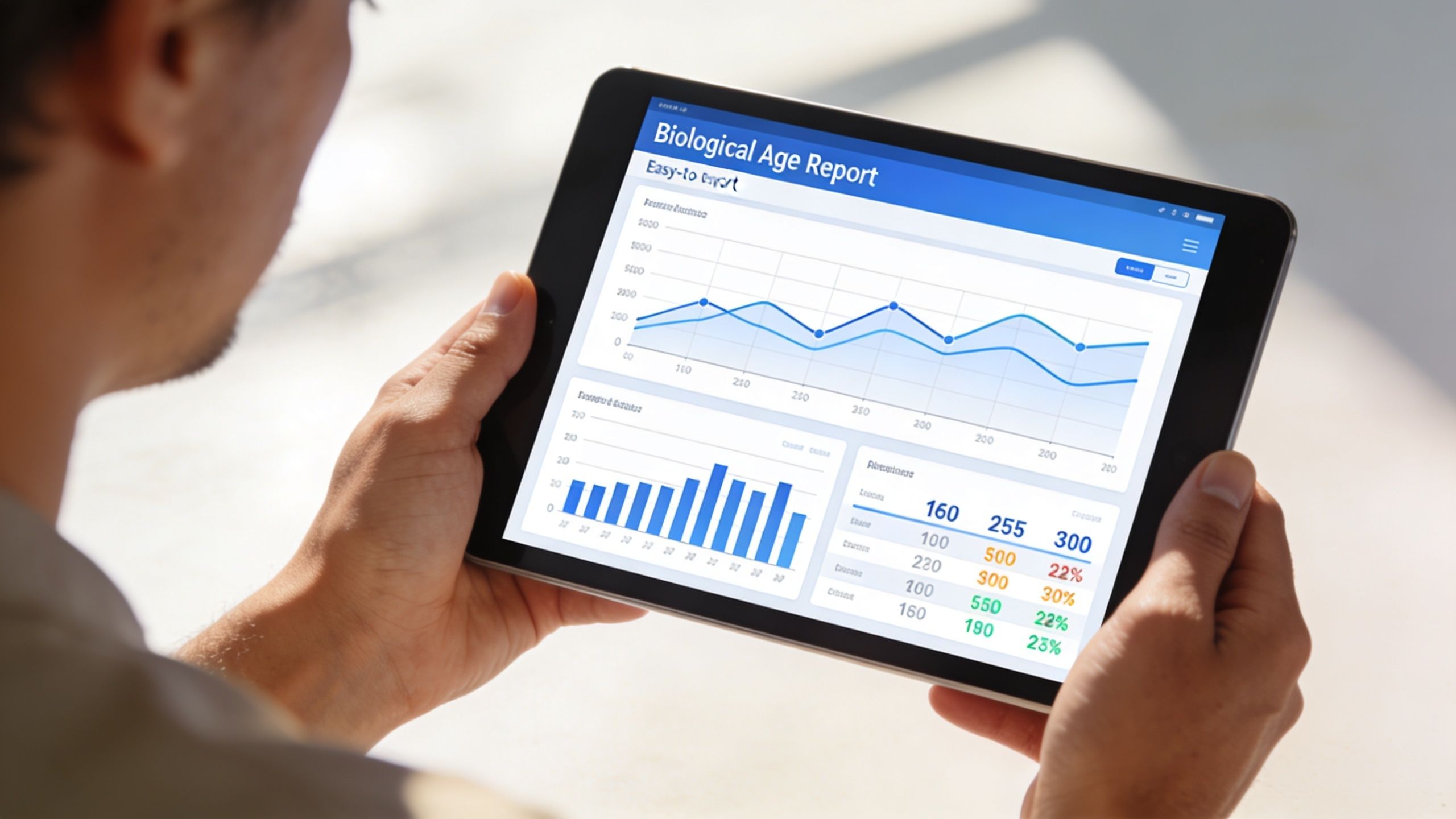
You get a report back and see one number sitting above or below your actual age. That sounds straightforward. The harder part is deciding what that difference means for your health, and what deserves attention first.
A useful interpretation starts with direction, then context.
Age acceleration and age deceleration
If your biological age is higher than your chronological age, that points to age acceleration. In practice, it suggests the body may be carrying more cumulative stress than expected for your years. If the result is lower, that points to age deceleration, which is generally consistent with better resilience and recovery capacity.
A matched result still matters. It usually means your current ageing pattern is tracking close to expectation, not that everything is optimal.
I advise reading the result as a signal, not a verdict. A single biological age score can flag that something needs attention, but it does not identify the cause on its own.
What the number can and cannot tell you
Biological age testing is good at showing whether your current physiology looks older, younger, or roughly in line with your calendar age. It is far less useful at explaining why without extra clinical context.
The common drivers are rarely just one thing. Poor sleep, inconsistent training recovery, alcohol intake, blood sugar strain, low nutrient status, chronic stress, gut symptoms, and persistent low-grade inflammation can all push the result in the wrong direction. That is why I often review biological age alongside symptom history and broader pathology, including markers relevant to vitamin and mineral deficiency blood testing in Australia.
That distinction matters.
A report can tell you that ageing pressure is present. It cannot tell you whether the pressure is coming from overtraining, under-recovery, metabolic issues, or an inflammatory burden linked to foods you are reacting to regularly.
Use the result to guide the next investigation
The best follow-up question is specific. What is most likely pushing this result?
For someone with a biological age above expectation, the next steps often include:
- reviewing sleep quality and recovery patterns
- checking whether training load matches recovery capacity
- looking at dietary patterns that may be sustaining inflammation
- investigating digestive symptoms, headaches, skin flares, or joint discomfort that may indicate unresolved immune activation
- repeating the test later to see whether targeted changes shift the result
This is the point many standard biological age tests fall short. They give a high-level score, but not always a practical roadmap. If inflammation is a major driver of accelerated ageing in your case, the useful question is not only how old your cells appear. It is what is provoking that inflammatory load, and whether it can be reduced through a personalised plan.
Why interpretation changes with the individual
Two people can receive the same biological age result for very different reasons. One may be a busy executive sleeping five hours a night and relying on caffeine. Another may eat well and exercise consistently but still deal with bloating, sinus congestion, skin issues, or poor recovery after meals that do not obviously seem problematic.
Those trade-offs matter in clinic. General anti-ageing advice can help, and some people also choose to explore peptides for longevity, but the better result usually comes from identifying the drivers you can modify. In many cases, that means looking closely at inflammation, immune reactivity, and whether delayed food sensitivities are keeping the system under strain.
A biological age score is most useful when it becomes the start of a targeted investigation. That is how the number turns into a plan.
Creating Your Personalised Age-Reversal Plan
If you want to check biological age, the next step is obvious. You need a plan that can plausibly change it.
Generic advice helps at the margins. Eat better, move more, sleep properly, manage stress. All of that still matters. But in practice, people often plateau because the plan isn't personal enough. It doesn't identify what is driving inflammation or systemic strain in their case.
Start with the obvious pillars, then go deeper
Most biological age improvement plans should still cover the basics:
- Movement that your body can recover from rather than sporadic extremes
- Sleep habits that are consistent instead of trying to compensate on weekends
- Stress regulation because chronic overload affects physiology whether you feel “stressed” or not
- A diet that lowers inflammatory burden rather than one built on trends
These foundations are necessary. They just aren't always sufficient.
Inflammaging is where many plans fail
Chronic, low-grade inflammation is one of the most common reasons a person feels older than their age despite making a visible effort. The challenge is that inflammation doesn't always announce itself dramatically. It may appear as fluctuating energy, bloating, headaches, skin issues, joint discomfort, or poor recovery.
Current biological age resources often acknowledge that lifestyle influences ageing, but they don't give Australian consumers a practical method for turning a result into a precise action plan. This review of the gap in biological age guidance notes that existing resources do not clearly show how to use diagnostics such as IgG food intolerance testing or stool flora analysis to build a personalised roadmap, and it describes this as a key gap for people trying to reverse ageing trajectories in a measurable way.
That gap matters in clinical work. “Reduce inflammation” is not a useful instruction if you don't know what is driving it.
The best plan isn't the strictest one. It's the one built around the actual driver.
Why personalised diagnostics are more useful than generic restriction
A broad elimination diet can sometimes lower symptom load, but it often creates confusion. People remove too much, reintroduce too fast, or never identify the specific trigger.
A more disciplined framework is to investigate likely inflammatory drivers directly, then tailor the response. Depending on the person, that may include:
- Delayed food sensitivity assessment when symptoms suggest a food-related inflammatory pattern
- Stool flora analysis when gut imbalance appears to be amplifying systemic symptoms
- Stress-related testing where autonomic load and recovery patterns look compromised
- Nutritional review to identify whether the person is under-fuelling, over-restricting, or missing key foundations
For some people, adjunctive longevity strategies can also be worth discussing with an informed practitioner. If you're reviewing broader options in that space, this guide to explore peptides for longevity is a useful background read. It shouldn't replace pathology or clinical interpretation, but it can help frame questions for a more advanced conversation.
A practical sequence that tends to work
When I advise on this area, the most useful sequence is usually not “test everything at once.” It is to build from the clearest signals.
- Establish a biological age baseline using a clinically sound method.
- Review symptoms and routine pathology for clues about inflammation, metabolic strain, and recovery.
- Investigate likely hidden drivers rather than layering on random supplements or diet rules.
- Implement a targeted plan with enough structure to assess response properly.
- Retest over time to see whether the intervention is changing the biology, not just the narrative.
For practitioners, collaboration is paramount. A functional or integrative framework can help connect symptoms, blood markers, digestive patterns, and ageing signals into a usable care plan. For patients looking for that style of support, functional medicine doctors in Australia can offer a more structured path than isolated consumer testing.
What usually doesn't work
Three patterns repeatedly waste time:
- Chasing a single magic biomarker and ignoring the wider clinical picture
- Using a standard healthy diet as if it suits everyone equally
- Making changes without a baseline, then guessing whether anything improved
Biological age can change. But it tends to change most meaningfully when the intervention matches the driver. If the issue is hidden inflammatory load from food reactions, generic macros won't solve it. If the issue is gut dysfunction, a supplement stack may only scratch the surface. If the issue is chronic stress physiology, a perfect diet still won't fully compensate.
The point of biological age testing isn't to collect another wellness metric. It's to direct attention toward the systems that need work, then confirm whether the work is paying off.
If you want a clinical-grade path to investigate inflammatory drivers alongside broader wellness testing, ImuPro Australia provides blood serum analysis collected through pathology centres, with options that can help practitioners and individuals build a more personalised plan around food sensitivities, gut health, stress, and related markers.