
Histamine Capacity Test – THDC
$349.00
Accurate Trusted Results
Phone
Support
100% Secure Checkout
Total Histamine Degradation Capacity (THDC)
Could your body be less able to process histamine than a DAO test alone suggests?
Histamine is a naturally occurring substance in the body and is also found in many foods. Your body has more than one process for regulating and breaking down histamine. DAO (diamine oxidase) is one important enzyme involved, but it is not the whole picture.
The Histamine Capacity Test measures Total Histamine Degradation Capacity (THDC): how effectively your blood serum can break down a controlled amount of histamine in the laboratory.
A broader assessment of your body’s ability to process histamine
Could your body be less able to process histamine than a DAO test alone suggests?
Histamine is a naturally occurring substance in the body and is also found in many foods. Your body has more than one process for regulating and breaking down histamine. DAO (diamine oxidase) is one important enzyme involved, but it is not the whole picture.
The Histamine Capacity Test measures Total Histamine Degradation Capacity (THDC): how effectively your blood serum can break down a controlled amount of histamine in the laboratory.
Histamine Capacity Test
• Measures Total Histamine Degradation Capacity (THDC), rather than focusing on DAO alone • Uses an ELISA laboratory method on a blood serum sample
• Measures how much histamine your serum actually degrades, not just how much of one enzyme is present
• May provide additional information when symptoms suggest histamine intolerance but DAO results do not explain the full picture
• Can be performed using the same blood sample as an ImuPro IgG food sensitivity test, provided sufficient serum remains
• Analysed in our specialised laboratory in Germany
• Results emailed approximately 2 weeks after your sample is shipped to Germany
• Available direct-to-consumer in Australia
What is histamine and how does your body process it?
Histamine plays important roles in the body, including functions related to the immune system. It is also naturally present in a range of foods, particularly foods that are aged, fermented or highly processed.
Two enzymes are mainly responsible for breaking histamine down: DAO and histamine N- methyltransferase (HNMT). Other processes may also contribute to the degradation or neutralisation of histamine in the blood.
Most people are able to regulate histamine effectively through these processes. However, the amount of DAO present does not necessarily tell us the full story about how effectively histamine is being degraded. This is where a broader functional assessment such as the Histamine Capacity Test may provide additional information.
Histamine intolerance
Histamine intolerance is generally described as a reduced ability to deal with histamine.
Symptoms can occur when the amount of histamine being introduced or produced exceeds the body’s ability to process it.
Symptoms can vary from person to person and may include:
• Bloating, abdominal discomfort, diarrhoea or constipation
• Headaches or migraine
• Flushing or red skin
• Hives or itching
• Nasal congestion
• Fatigue or dizziness
• Palpitations
• Other symptoms associated with particular foods or meals
These symptoms can have many possible causes. A test result should therefore be considered alongside your symptoms and other relevant information. If symptoms are severe, sudden, persistent or concerning, seek medical advice promptly.
Why look beyond DAO?
The DAO Histamine Intolerance Test provides information about DAO, an important enzyme involved in histamine degradation. For many people, it is a useful and more affordable first step.
However, a normal DAO result does not necessarily mean that overall histamine-degrading capacity is normal. The Histamine Capacity Test looks at the functional capacity of the serum to degrade histamine, rather than measuring the amount of a particular enzyme.
This broader assessment may be useful when you have symptoms associated with histamine but your DAO result does not appear to explain them.
DAO Test vs Histamine Capacity Test
| DAO Histamine Intolerance Test | Histamine Capacity Test | |
|---|---|---|
| What is assessed | DAO activity | Total Histamine Degradation Capacity (THDC) |
| What it tells you | Provides information about an important enzyme involved in histamine degradation | Provides a broader functional assessment of the serum’s capacity to degrade histamine |
| Method | ELISA measurement of DAO activity | ELISA measurement of histamine degraded by your serum, before and after incubation |
| Price | $185 | $349 |
| When it may be useful | A useful, more affordable first step when exploring possible histamine intolerance | When a broader assessment is wanted, including when symptoms persist despite a sufficiently high DAO result |
The two tests measure different aspects of histamine processing. The Histamine Capacity Test is not simply a more detailed DAO test, and it is not necessary for everyone.
How the Histamine Capacity Test works
- Order your Histamine Capacity Test online.
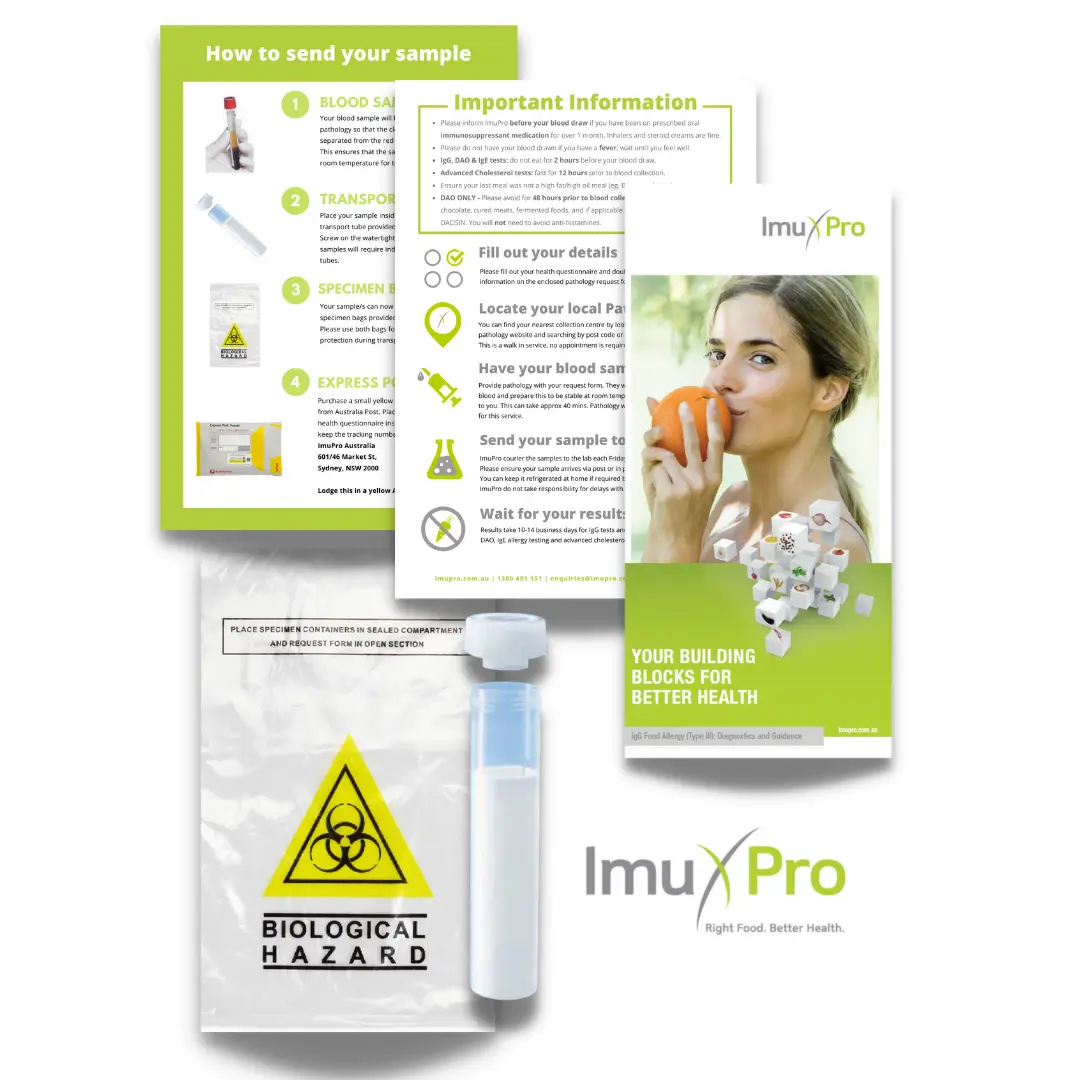
- Have a standard blood sample collected at a local pathology collection centre.
- The blood is processed to obtain serum. Samples are shipped to our laboratory in Germany every week.
- Your serum is analysed for Total Histamine Degradation Capacity.
- Your results are emailed approximately 2 weeks after your sample is couriered to Germany.
What does the test measure in the laboratory?
The method. The Histamine Capacity Test uses an ELISA (enzyme-linked immunosorbent assay) to measure the concentration of histamine in your serum sample before and after a controlled incubation with added histamine (24 hours). The difference shows how much histamine your serum was able to degrade.
What is measured. The test does not measure the amount or activity of one particular enzyme. It measures the outcome: how much histamine is degraded in your individual sample. This means it reflects histamine degradation regardless of which pathway is responsible.
Individual evaluation. Every sample is evaluated individually, with the amount of histamine adjusted in relation to the sample volume, and the rate of degradation measured for that sample.
No challenge in your body. The histamine challenge takes place in the laboratory, not in your body. You do not need to have symptoms when your blood is collected, and you do not need to eat histamine-containing foods beforehand.
Before your test
Avoid histamine rich food like alcohol, cheese, chocolate, cured meats, fermented foods and DAO supplements 48hrs before your blood draw. You will not need to avoid antihistamines.
If you take prescribed medication or have a health condition, do not change your medication, diet or treatment plan for testing unless your healthcare professional advises you to do so.
Before your test
Several tests can be performed from the same blood sample.
This makes it possible to investigate histamine-degrading capacity and potential food-related immune responses from the same blood collection.
If you have recently completed an ImuPro test, contact us if you would like to add on this test for further insight.
Understanding your results
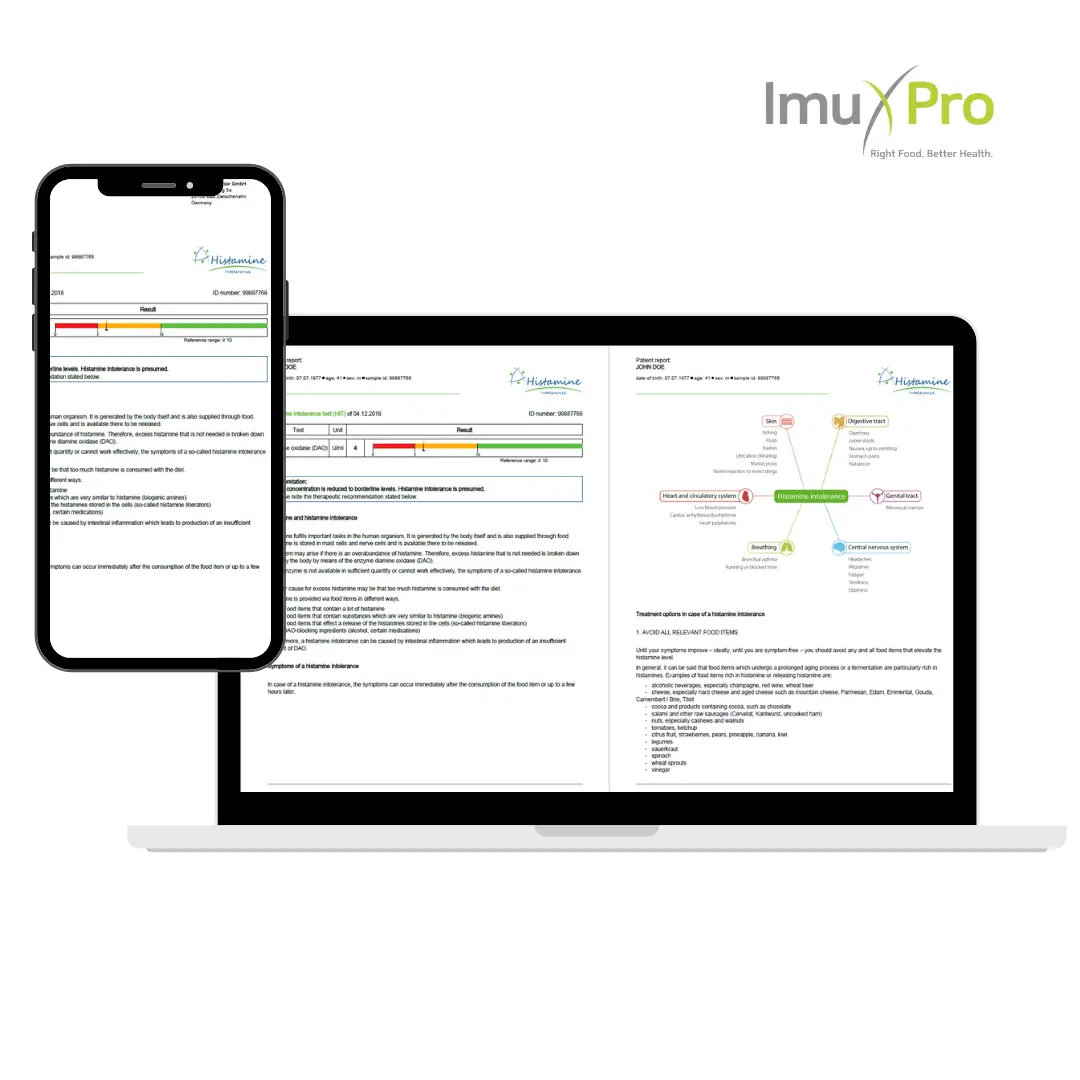
Your report shows the histamine concentration in your serum before and after incubation with a controlled amount of histamine, and the percentage of histamine that was degraded. Together these give your Total Histamine Degradation Capacity (THDC), which reflects the ability of the tested serum to degrade histamine under the laboratory test conditions.
A reduced THDC result may provide additional information for people experiencing symptoms they associate with histamine. A result should not be interpreted on its own as proof that histamine intolerance is the sole cause of symptoms.
Your result can be considered alongside your symptoms and, where appropriate, other investigations such as ImuPro IgG food sensitivity testing. If you are working with a practitioner, share your result with them so it can be considered in the context of your health history.
With your test, you will receive:
- An analysis of your serum to determine Total Histamine Degradation Capacity (THDC), including histamine concentration before and after incubation and the percentage degraded
- A clear report explaining your result
- Information that can be considered alongside your symptoms and other relevant test results

With your test, you will receive:
- An analysis of your serum to determine Total Histamine Degradation Capacity (THDC), including histamine concentration before and after incubation and the percentage degraded
- A clear report explaining your result
- Information that can be considered alongside your symptoms and other relevant test results
Frequently Asked Questions
What is Total Histamine Degradation Capacity (THDC)?
THDC describes the ability of the tested serum to degrade histamine under standardised laboratory conditions. It is a functional measurement of how much histamine is degraded, rather than a measurement of the amount of one particular enzyme.
How is the Histamine Capacity Test different from the DAO test?
The DAO test focuses specifically on DAO, an important enzyme involved in histamine degradation. The Histamine Capacity Test measures the total histamine-degrading capacity of the serum. They provide different information and can be considered complementary.
Does the Histamine Capacity Test measure the amount of DAO in my blood?
No. The test is not designed to measure the quantity of DAO. It assesses the capacity of the serum to degrade histamine, which can provide different information from measuring DAO concentration or activity alone.
Does a low THDC result mean that I have histamine intolerance?
A THDC result is one piece of information and should not be used on its own to diagnose histamine intolerance. The result should be considered together with your symptoms, dietary history and other relevant clinical information.
How is the sample collected?
What do I need to do before the test?
Can the Histamine Capacity Test be done with my ImuPro food sensitivity test?
Can I have both a DAO test and a Histamine Capacity Test?
The Histamine Capacity Test provides a broader assessment of histamine-degrading capacity than the DAO test. If you choose the Histamine Capacity Test, you generally would not also need a separate DAO test.
Could histamine be part of the picture?
What does the test actually measure in the laboratory?
An ELISA method is used to measure histamine in your serum before and after it is incubated with a controlled amount of added histamine. The result shows how much histamine your serum degraded, expressed as concentrations before and after and a percentage degraded.
If my DAO result is normal, could my THDC still be reduced?
Yes. DAO is one part of histamine degradation. A sufficiently high DAO result does not necessarily mean that the overall histamine-degrading capacity of the serum is normal. THDC provides a broader functional assessment.
Why might my DAO result not explain my symptoms?
DAO is an important part of histamine processing, but histamine degradation can be influenced by more than DAO alone. If your symptoms are suggestive of histamine intolerance but your DAO result is sufficiently high, a functional assessment of total histamine-degrading capacity may provide additional information.
Is IgG food testing accurate?
Your IgG food allergy test will be performed by a highly professional and specialised in vitro diagnostic laboratory. The lab will analyse your serum sample and determine the presence of specific IgG antibodies to a broad variety of foods. The antibodies are detected by their ability to bind to specific proteins from up to 270 analysed foods. Based on the results of the antibody titre, the foodstuffs are then categorised into three groups: not elevated, elevated and highly elevated.
The specific IgG concentrations determined by the test do not necessarily reflect the occurrence or the severity of serious clinical symptoms. They offer the basis for an elimination and provocation diet. ImuPro guides you through this process with three phases: the elimination, the provocation and the stabilisation phase.
Critics often argue that every human being produces IgG antibodies to foods and that allergies are rare. However, they are often referring to classic type I allergy and not sufficiently differentiating between types of antibodies. Type I allergies are associated with quick-reaction symptoms, e.g. a rash, hives or swelling. Such symptoms are usually based on the release of histamine in which IgE antibodies are involved. ImuPro, however, tests for IgG antibodies which can trigger delayed type III allergies – ImuPro does not test IgE mediated acute allergies (type I) or merely IgG-4-antibodies (non inflammatory). ImuPro tests for all subclasses of pro-inflammatory IgG (1, 2, 3 and 4). The differences with regard to types of allergy and the different classes of antibodies have to be kept in mind when evaluating the ImuPro test.
Note: ImuPro does not examine classic IgE-mediated allergies (type I) or intolerances to lactose, fructose and histamine. In such cases, specific test systems should be applied.