
You might be reading this after another meal that should have been harmless. Instead, you’re bloated, your skin is prickly, your head feels heavy, and you’re trying to work out why the pattern keeps repeating. Many people with suspected histamine intolerance have already done the usual rounds. They’ve tried cutting out one food, then another, had standard allergy testing, and still don’t have a satisfying answer.
That’s why testing for histamine intolerance needs a process, not guesswork. The most useful approach usually combines careful symptom tracking, a structured dietary trial, and in some cases laboratory testing or practitioner-led investigation. In Australia, that pathway can feel unclear because histamine-focused testing isn’t commonly offered through routine care. It still can be done, but it helps to know what each step can and can’t tell you.
Starting Your Investigation with Symptom Tracking
The early stage is often messy. A person notices headaches after wine one week, flushing after leftovers the next, then gut symptoms after a meal that seemed completely different. Because the reactions can involve digestion, skin, mood, sinuses, and energy, histamine intolerance is easy to dismiss as “just stress” or “a sensitive stomach”.
What helps first is structure. Before changing your diet or ordering tests, collect a baseline. If you suspect histamine may be part of the picture, start with a food and symptom diary for at least several days and preferably longer.

If you’re still working out whether your symptom pattern fits, this overview on could you be suffering histamine intolerance is a useful starting point.
What to record each day
A good diary does more than list meals. Histamine-related symptoms are often influenced by timing, quantity, and the body’s overall load that day.
Include:
- Food and drinks: Write down what you ate, how it was cooked, and whether it was freshly prepared or leftover.
- Timing: Record when you ate and when symptoms started. Some people react quickly. Others notice a delayed build-up.
- Symptoms: Note bloating, reflux, headaches, flushing, itch, rash, fatigue, brain fog, sinus symptoms, loose stools, or palpitations in plain language.
- Context: Add stress, sleep quality, alcohol, exercise, menstrual cycle changes, and illness. These details often explain why one meal causes trouble on one day but not another.
- Severity: Keep it simple. Mild, moderate, or severe is enough if you’ll use it consistently.
Practical rule: Don’t try to interpret every single symptom in real time. Collect the pattern first, then review it.
A simple diary template
You don’t need a perfect spreadsheet. A notes app, paper diary, or basic table works well.
| Day | Meals and drinks | Symptoms | Timing | Other factors |
|---|---|---|---|---|
| Monday | Breakfast, lunch, dinner, snacks | Headache, bloating, itch, fatigue | Time eaten and time symptoms appeared | Sleep, stress, alcohol, exercise |
Two things matter more than detail. Be honest, and be consistent.
What patterns matter most
One high-histamine food doesn’t prove histamine intolerance. A repeated cluster matters more. For example, symptoms that flare after aged, fermented, cured, or leftover foods are more suggestive than one isolated reaction.
I also look for symptom “stacking”. A person may tolerate a food on a calm, well-rested day, then react when poor sleep, stress, and alcohol all land together. That pattern is common in practice and is one reason random food avoidance often fails.
Symptoms without a pattern usually create confusion. Symptoms with timing and repetition create something you can investigate.
The Low-Histamine Diet Your Foundational Diagnostic Step
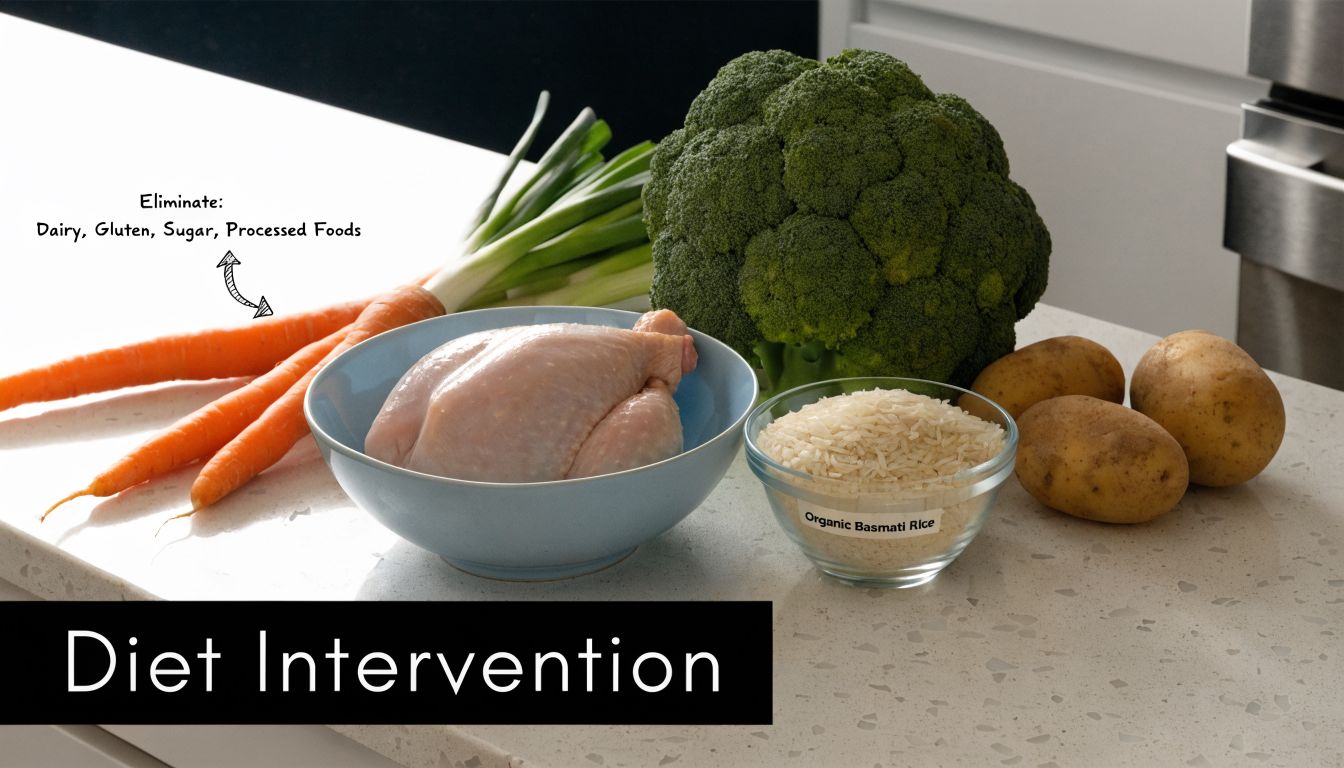
A low-histamine elimination diet is still one of the most practical ways to test whether histamine is relevant. It isn’t meant to become a permanent diet. It’s a short diagnostic trial designed to answer a clear question. Do symptoms calm down when histamine exposure is reduced?
How to run the elimination phase
Keep the diet strict and time-limited. Four weeks is a practical window for many people. During that time, simplify meals and remove foods that commonly create histamine load.
Common foods people often avoid during a trial include:
- Fermented foods: Sauerkraut, kimchi, kombucha, yoghurt, vinegar-heavy foods.
- Aged items: Aged cheeses, cured meats, smoked meats.
- Alcohol: Especially drinks that people often associate with flushing or headache.
- Leftovers and older proteins: Freshness matters because histamine can build as foods age.
- Certain packaged convenience foods: These can be difficult to interpret because they combine multiple potential triggers.
Foods that are often easier to work with during a trial include:
- Freshly cooked meats or poultry
- Plain rice and potatoes
- Many simple vegetables
- Basic oils and uncomplicated seasonings
- Freshly prepared meals rather than batch-cooked meals kept for days
If you’re also trying to work out the wider food picture, this guide on how to identify food sensitivities is helpful because it explains how symptom patterns can overlap.
Make it realistic, not perfect
The people who get useful answers aren’t the ones who create the most restrictive diet. They’re the ones who make the plan doable enough to follow properly.
A simple day might look like this:
- Breakfast: Rice porridge or another simple low-reactivity meal
- Lunch: Freshly cooked chicken, rice, and steamed vegetables
- Dinner: Fresh fish or poultry with potatoes and vegetables
- Snacks: Plain options you know you generally tolerate
Shopping and cooking habits matter here. Buy smaller amounts more often if you can. Freeze portions promptly. Avoid “healthy” foods that are fermented or aged if they repeatedly trigger symptoms.
For meal ideas, low histamine alternatives can make the diet feel less punishing and more practical.
The reintroduction phase matters just as much
If symptoms improve, don’t stay on a highly restricted diet indefinitely. Reintroduce foods one at a time in an organised way. That’s how you learn whether the issue is broad histamine load, a few key foods, or something else entirely.
Try this approach:
- Choose one food you want to test.
- Use a clear portion and keep the rest of the day consistent.
- Watch symptoms over the same day and the following day.
- Pause before the next challenge so reactions don’t blur together.
A diagnostic diet is successful when it gives you information, not when it gives you the longest avoid list.
Choosing the Right Lab Test for Histamine Intolerance
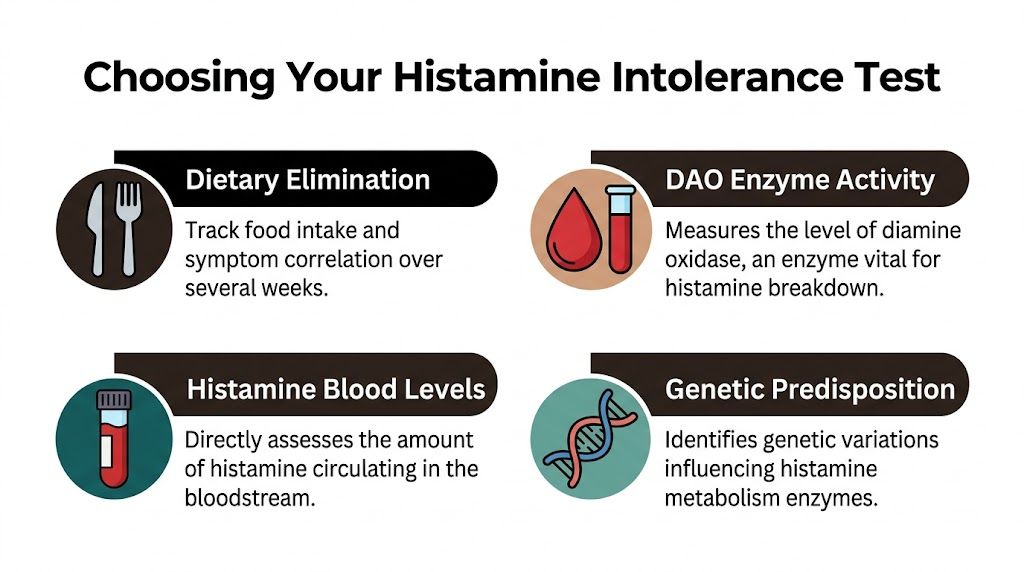
A diet trial tells you whether lowering exposure changes symptoms. A lab test can add another layer by showing whether your body appears to have reduced capacity to break down histamine. That’s where many people ask how to test for histamine intolerance more objectively.
The most discussed laboratory marker is DAO, short for diamine oxidase. DAO is the main enzyme involved in breaking down dietary histamine. Low DAO activity can support the picture of histamine intolerance, especially when it matches the person’s symptoms and dietary response.
What DAO testing can tell you
According to the diagnostic information summarised in this DAO testing overview, serum DAO testing is performed by fasting blood draw, with fasting for 8 to 12 hours, and low levels of less than 40 HDU/ml indicate reduced histamine breakdown capacity. The same source notes that results may return in 5 to 7 business days in some settings, and that a clinical study of 316 Australian patients with suspected histamine intolerance found highly reduced DAO activity in confirmed cases. After 6 to 12 months on a histamine-free diet, all showed clinical improvement and normalised DAO activity. It also notes that, in Australia, direct-to-consumer DAO testing through ImuPro Australia is available with results delivered in 10 to 20 days from ISO-certified German labs.
That makes DAO testing useful for two reasons. It may support diagnosis, and it may also help track change over time when it’s interpreted alongside symptoms and diet.
Other tests people ask about
Some people ask for serum histamine or urine metabolite testing. These can sometimes add context, but they’re harder to interpret in isolation because histamine levels can vary and snapshots don’t always match lived symptoms.
Urine N-methylhistamine is described in the same diagnostic overview as a complementary test using 24-hour collection, with results in 7 to 10 days. It aims to measure histamine metabolites rather than DAO itself. That can be interesting, but it’s not usually the first place I’d start unless a practitioner has a clear reason to include it.
A test is only useful if its result changes the plan. For many people, DAO is the more actionable blood-based marker because it connects more directly to dietary histamine breakdown.
Comparing Histamine Intolerance Tests
| Test Name | What It Measures | Sample Type | Key Indication |
|---|---|---|---|
| Dietary elimination | Symptom change when high-histamine foods are removed | Food and symptom record | Whether reducing histamine load improves symptoms |
| DAO enzyme activity | Diamine oxidase activity linked to histamine breakdown | Blood serum | Whether low DAO may be contributing to poor histamine tolerance |
| Histamine blood levels | Circulating histamine at a point in time | Blood | May add context, but can be difficult to interpret alone |
| Urine N-methylhistamine | Histamine metabolite output | Urine collection | A complementary view of histamine metabolism |
The Australian access issue
Local context matters. In Australia, DAO testing isn’t routinely built into standard pathology pathways, so many patients hear about it online but struggle to find a straightforward option locally. If you want to see what a direct-access pathway looks like, the DAO Histamine Intolerance Test measures DAO enzyme activity from a blood serum sample.
Lab testing works best when it answers a practical question. Does this result support what your symptoms and diet trial are already suggesting, or does it push the investigation in a different direction?
Making Sense of Your Results Diet and Test Findings
The hardest part often isn’t collecting data. It’s working out what to do with mixed results.
A clean response looks simple on paper. Symptoms improve clearly on a low-histamine trial, then return when certain foods are reintroduced. But many people don’t get such a neat answer. They improve partly, their DAO result seems borderline, or their symptoms shift rather than disappear.

When the diet helps but not completely
Partial improvement still matters. It may mean histamine is one layer of the problem, not the whole story.
That often happens when someone has ongoing digestive irritation, a limited food range, or delayed food reactions that don’t fit a classic histamine pattern alone. In those cases, broad inflammation in the gut may lower tolerance generally, including tolerance to histamine-rich foods.
When the lab result and symptoms don’t match perfectly
A low DAO result can be meaningful if the clinical picture fits. But a result on its own should never be treated as a complete diagnosis. The same goes for symptom diaries. A pattern can be suggestive without being exclusive to histamine.
What matters most is the combined picture:
- Clear symptom pattern plus clear diet response: Histamine involvement is more likely.
- Clear symptoms but no meaningful diet response: Look wider.
- Low DAO but inconsistent symptoms: Don’t overinterpret. Correlate with real-life reactions.
- Ongoing symptoms despite careful testing: Consider overlap with other food-related mechanisms or gut issues.
Results are more useful when they agree with each other. One isolated data point rarely settles the question.
Where IgG testing can add context
Some people with suspected histamine intolerance also react to foods in a delayed, less obvious way. They may not get immediate allergy symptoms, but they feel inflamed, bloated, foggy, or congested after recurring foods in their weekly diet. That’s where IgG food testing may be considered as part of a broader clinical work-up.
The reason this matters is practical. If certain foods are contributing to ongoing immune activation or gut irritation, the person may become less resilient overall. In that setting, histamine-rich foods can hit harder. Looking at histamine in isolation can miss that wider pattern.
I usually tell patients to think in layers. Histamine may be the spark they notice first, but the background can include gut irritation, repeated food reactions, poor recovery, and an overwhelmed system.
When to Involve a Practitioner for Deeper Diagnosis
Self-testing has limits. If your symptoms are strong, unpredictable, or not improving despite a careful diet trial, involve a practitioner. That doesn’t mean you’ve failed. It means the differential diagnosis matters.
Histamine intolerance can resemble several other conditions. True IgE-mediated food allergy, gut disorders, and mast cell conditions can all create overlap. Some people need a GP, dietitian, allergist, or naturopath to sort through what belongs where.
Signs you shouldn’t manage alone
Ask for clinical support if you have:
- Acute or severe reactions: Breathing symptoms, marked swelling, or reactions that feel urgent need medical assessment.
- Very restricted eating: If your food list is shrinking fast, nutritional adequacy becomes a priority.
- No clear response to a strict trial: That usually means the original theory may be incomplete.
- Complex symptom clusters: Dizziness, flushing, gut symptoms, skin reactions, and cardiovascular symptoms together deserve a deeper review.
If mast cell disorders are part of the discussion, this overview of Mast Cell Activation Syndrome (MCAS) is a helpful reference for understanding how the symptom picture can differ from simple dietary histamine issues.
Practitioner-led testing can refine the picture
For clinician-guided diagnosis, the Histamine 50-Skin-Prick Test has some useful evidence behind it. In this clinical study published in PMC, 79% of patients with confirmed histamine intolerance had a positive result, defined as a wheal of 3 mm or greater after 50 minutes, compared with 18.7% of healthy controls. The test helps assess delayed breakdown of histamine in the skin and can help distinguish histamine intolerance from other conditions.
That test is not typically organised independently. It sits best within a practitioner-led work-up where someone is also ruling out allergy, gut pathology, and other inflammatory drivers.
If your symptoms don’t fit neatly, don’t force them into a histamine label. A broader assessment often saves time, money, and unnecessary restriction.
Creating Your Personalised Histamine Management Strategy
The end goal isn’t a perfect test result. It’s a way of eating and living that gives you more freedom with fewer symptoms.
Once you’ve done the investigation, build a plan around your actual tolerance. Many people can handle some histamine. The issue is usually threshold. One food may be fine, while a stack of triggers on a stressed, underslept day is not.
Find your personal threshold
Reintroduction is where you learn what your “bucket” looks like in real life.
Use these principles:
- Reintroduce one variable at a time. Mixed meals make the result muddy.
- Start with foods you miss most. That keeps the process relevant.
- Watch the total load of the day. A tolerated food may stop being tolerated when several triggers pile up.
- Keep your symptom notes going. You’ll usually spot capacity before you can describe the mechanism.
Support the system around the food
Food is central, but it isn’t the whole story. Sleep disruption, stress, alcohol, and an irritated gut often lower tolerance even when the diet itself hasn’t changed.
Useful long-term habits often include:
- Cooking fresh more often: This reduces the uncertainty that comes with aged or leftover foods.
- Avoiding unnecessary restriction: The narrowest diet isn’t the healthiest diet.
- Using DAO supplements selectively: Some people choose them before meals that may be harder to tolerate.
- Reviewing nutrients with a practitioner: Nutritional support may be relevant where intake has been limited or symptoms have affected digestion.
Keep the plan flexible
Your management strategy should be personalised enough that you can follow it in ordinary life. That usually means knowing your high-risk foods, your moderate foods, and your generally safe foods. It also means understanding your non-food triggers so you can be more flexible when life is busy.
If you’ve been wondering how to test for histamine intolerance, the short answer is that no single step is enough on its own. The most dependable pathway is a structured symptom diary, a careful low-histamine trial, and targeted testing when the result will change your next decision.
If you want a more structured way to investigate persistent food-related symptoms, ImuPro Australia offers clinical-grade testing options for histamine intolerance and delayed food reactions, with pathology collection and personalised reporting designed to support a more informed discussion with your healthcare practitioner.