
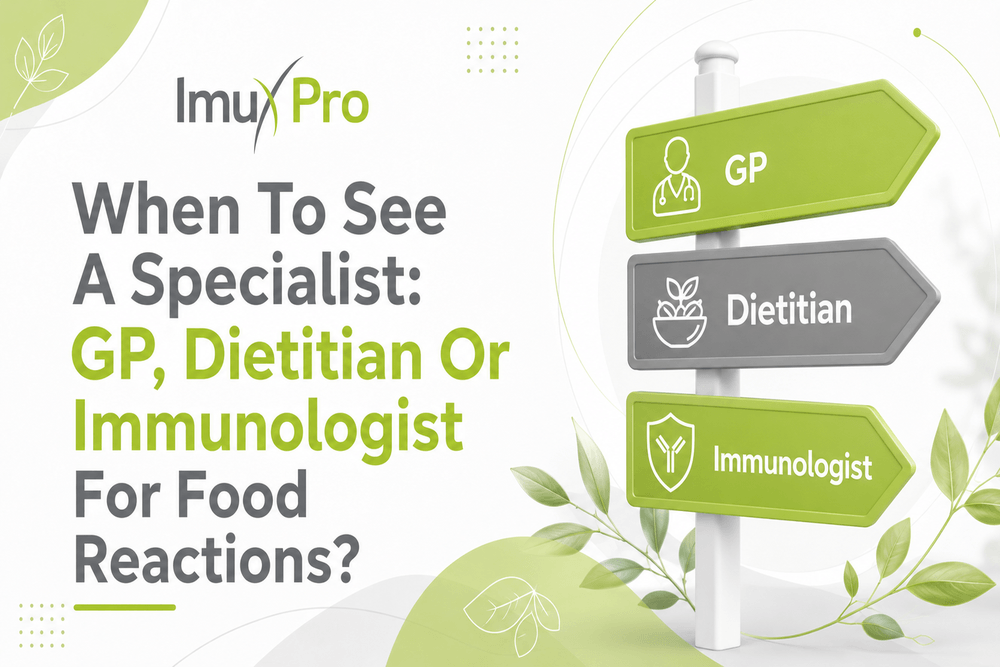
Do you live with rebounding bloating, unexplained brain fog, or sudden hives, only to receive completely normal medical test results? If so, then knowing when to see a GP for food reactions is your logical next step.
When standard medical panels return a frustrating blank slate, it leaves you stranded between what the lab says and what your body is telling you. You know your own system better than anyone, and if daily meals cause recurring distress, understanding the different types of biological responses is how you regain control.
Furthermore, different medical professionals handle entirely different physical reactions, so knowing exactly which expert you need helps you find relief faster.
Signs of a food allergy vs food intolerance: why the distinction matters
The biological mechanics behind dietary reactions vary wildly. Pinpointing your exact symptom timeline helps determine whether you need a food allergy or food intolerance specialist. Understanding exactly what constitutes a food allergy vs food intolerance offers much-needed clarity.
Here is how to classify your symptoms to find the appropriate professional:
- Food Allergy (IgE-mediated): Rapid onset, typically within minutes to two hours. Symptoms include hives, facial swelling, vomiting, or anaphylaxis. Requires an immunologist or allergist.
- Food Intolerance (Enzyme-based): Localised digestive reactions, such as an inability to break down lactose properly. Managed effectively by a GP or dietitian.
- Food Sensitivity (IgG-mediated): Delayed, systemic responses appearing hours or days later. Symptoms include bloating, headaches, fatigue, and eczema. Best managed via specialised testing alongside a naturopath, dietitian, or integrative GP.
As these delayed reactions are so frequently misunderstood, you can read our deep dive on food intolerance vs food sensitivity explained to better understand how each impacts your immune system.
When to see your GP first
Your GP is the safest first point of contact for any recurring physical symptom. A thorough medical consultation helps rule out serious underlying conditions such as coeliac disease or inflammatory bowel disease. They provide the necessary clinical oversight to make sure nothing urgent is missed.
Doctors hold the key to baseline medical investigations, such as standard blood panels or skin prick tests. And indeed, your GP acts as the essential gatekeeper to Medicare-subsidised specialist care. For any suspected severe reaction (especially in young children where the risk of sudden breathing difficulty exists), a medical referral is absolutely essential and should never be delayed.
When to see a dietitian
Figuring out when to see a dietitian for food intolerance comes down to daily management rather than initial medical diagnosis. A dietitian is the ideal professional when your main challenge is safely adjusting what you eat. They take the intense fear out of food.
An accredited practising dietitian translates clinical data into a diverse plate, so you don’t fall into a cycle of unnecessary restriction. They outline a structured elimination protocol in practice, systematically removing a specific food group and closely monitoring your baseline symptoms over several weeks. Once the body settles, they safely reintroduce ingredients.
Particularly when dealing with delayed IgG reactions, working alongside one of our recommended practitioners in Australia can help you maintain optimal nutrition while your digestive system actively recovers.
When to see a clinical immunologist or allergist
You need a clinical immunologist or allergist if there is any suspicion of an immediate, IgE-mediated allergy. This is non-negotiable if previous symptoms have included anaphylaxis, sudden facial swelling, or severe respiratory issues. An unexpected allergic reaction is terrifying, and specialist care offers absolute safety.
Parents naturally worry when their children exhibit multiple immediate reactions to new foods. In these high-stress situations, an allergist provides the rigorous clinical oversight needed to keep children safe at home and school.
To secure a Medicare rebate for formal food allergy testing in Australia, you will first need a formal referral from your GP.
What if standard testing doesn’t find the cause?
For individuals whose symptoms are persistent, delayed, and simply do not match the immediate-reaction profile of a classic allergy, standard testing often leaves questions entirely unanswered. If you fall into this frustrating gap, an igG food sensitivity test in Australia is an incredibly helpful tool to gain clear, objective data.
ImuPro laboratories utilise scientifically validated ELISA blood serum analysis to look directly at your delayed immune signatures across up to 270 individual foods. You can discover more about ImuPro and how we prioritise reliable, reproducible results through a single blood draw.
We offer families the complete flexibility to start with a smaller testing panel and upgrade within four weeks using that exact same sample. Reading the simple instructions on how to take the ImuPro test shows just how easy it is to receive your highly individualised report, complete with specific recipes designed to support your ongoing digestive health.
Next steps
If you are struggling with unexplained daily symptoms, always start with a visit to your GP to rule out primary medical conditions. Once you have a clear medical baseline, consider whether advanced IgG testing might finally map out your hidden nutritional triggers.
When you are ready to delve deeper, explore the testing options at ImuPro Australia or contact us directly to discuss how to trace your trigger foods.