
Overhauling your weekly dinner rotation because of a sudden sensitivity is an uphill battle.
Cutting out aged cheeses, fermented foods, and nightshades can make cooking in your kitchen feel like walking through a minefield. Fortunately, sourcing and preparing simple low histamine recipes in Australia doesn’t mean having to eat boring meals every day.
At ImuPro Australia, we help you replace the restrictive recipes with fresh, vibrant ingredients that keep cooking stress-free while calming systemic inflammation.
What Is a Low Histamine Diet?
Histamine is a natural chemical present in your immune system and everyday foods. A low histamine diet is a management tool for clearing this chemical efficiently. Normally, your digestive system produces enzymes to break dietary histamine down. When this process stalls, the chemical leaks into your bloodstream and triggers systemic alarms.
The core rule of this eating approach relies on absolute freshness. As food sits on the benchtop, bacteria break down amino acids into histamine. A freshly cooked piece of chicken is usually perfectly safe. That same chicken left chilling overnight quickly becomes a massive inflammatory trigger. Finding what works for your personal tolerance threshold takes careful observation.
Understanding this timeline prevents frustrating and painful physical reactions. You regain control of your symptoms by managing how long your food sits before eating.
Low Histamine Foods to Build Meals Around
Constructing a balanced, satisfying plate is much easier when relying on reliable staple foods.
When looking for low histamine meal ideas, try building your next grocery list around these fresh foundations:
- Quick-frozen poultry: Fresh chicken and turkey breast, cooked immediately or frozen straight from the market.
- Same-day seafood: Freshly caught white fish sourced directly from a trusted fishmonger and prepared that very evening.
- Gluten-free grains: Rice, quinoa, and rolled oats act as safe, filling bases for your meals.
- Low-reactivity vegetables: Crisp zucchini, carrots, sweet potatoes, and leafy greens packed with fibre.
- Safe fruits: Sweet pears and crisp apples satisfy cravings without the histamine spike of citrus.
Simple Low Histamine Meal Ideas
Finding satisfying low-histamine meal ideas all comes down to simple assembly. You just need to focus on combining fresh elements without relying on heavy commercial sauces.
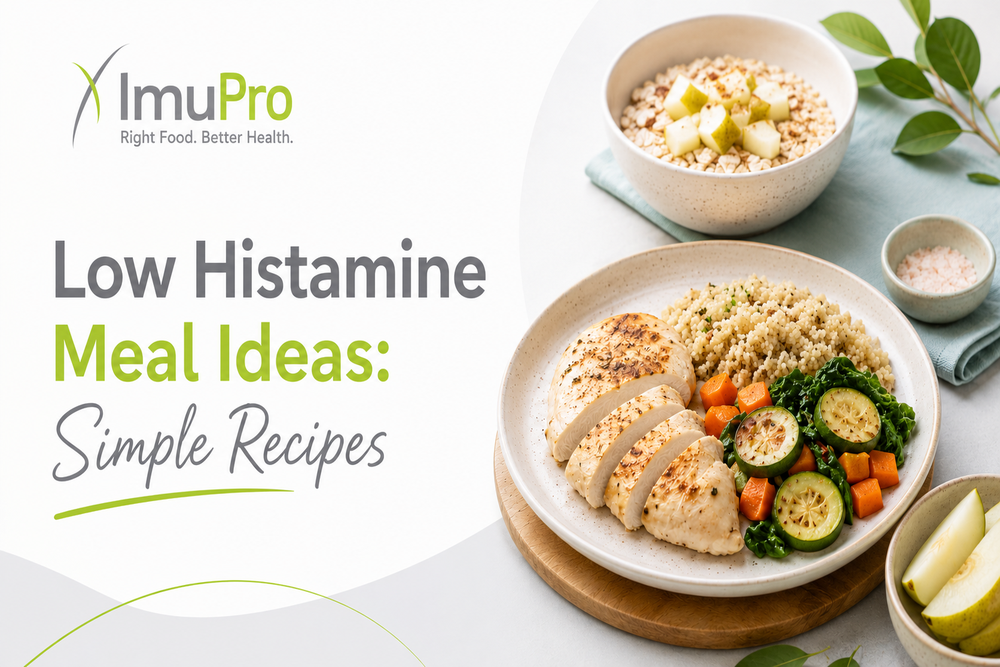
For breakfast, try a warm bowl of rolled oats simmered in pure coconut milk. Top it with freshly diced pear and a pinch of cinnamon for an anti-inflammatory start. This provides slow-release energy for your morning without any unexpected inflammatory spikes. Swapping out citrus fruits for these safer alternatives keeps your gut entirely settled.
Come lunchtime, a highly filling option is freshly grilled chicken breast served over plain quinoa. Toss in some roasted zucchini and carrots coated lightly in olive oil. This creates a quick, scratch-made plate that tastes incredible and digests easily.
At dinner, slice fresh turkey breast and flash-fry it rapidly in a hot pan. Add chopped leafy greens and zucchini ribbons, serving immediately over steamed white rice. Skip the fermented soy sauces and season simply with fresh garlic and salt.
Tips for Preparing Low-Histamine Recipes in Australia
Cooking for a sensitive gut requires a slight shift in your daily kitchen habits. How you handle your food is just as important as what you buy:
- Buy fresh: Purchase meat with the longest possible shelf life and cook it immediately. Never buy discounted meat approaching its use-by date when managing systemic inflammation.
- Freeze instantly: Portion out dinner leftovers straight into the freezer to halt bacterial histamine production. The faster the temperature drops, the safer your food remains for later consumption.
- Avoid batch chilling: Batch cooking only works if you rely on deep-freezing rather than refrigerator storage. Keeping a container in the fridge for three days guarantees a histamine spike.
- Check labels: Watch out for hidden artificial preservatives and yeast extracts in commercial sauces. Stick to single-ingredient flavourings like fresh herbs, garlic, and quality olive oil.
- Thaw safely: Defrost your frozen meals rapidly in a microwave rather than leaving them out all day. Slow thawing gives bacteria too much time to multiply and generate histamine.
When Should You Seek Further Advice?
Chronic bloating, lingering brain fog, and unpredictable skin rashes stem from numerous overlapping health issues. Before committing to a highly restrictive elimination diet, it’s worth ruling out other medical causes.
Standard clinical assessments are essential for confirming immediate IgE allergies. You should follow established guidelines from the Australasian Society of Clinical Immunology and Allergy (ASCIA). Further excellent guidance comes from the Royal Children’s Hospital Melbourne regarding severe food reactions.
If standard IgE allergy tests return clear, you might still struggle 48 hours after meals. This delay makes it worth looking into hidden delayed sensitivities. You can read more about us and how we use validated ELISA blood serum testing, so you only remove foods actively causing inflammation.
Conclusion
Shifting your food habits shouldn’t mean staying trapped in a loop of restrictive guesswork.
Focusing on fresh ingredients and simple combinations makes the transition entirely manageable. Small, deliberate changes to your kitchen routine create a sustainable path to lasting symptom relief.
Are you ready for concrete data on how your immune system responds to up to 270 individual foods? Then contact us today to speak with one of our consultants about optimising your relationship with food.